Radiant Tube Failure: Common Causes and How to Extend Tube Life
Why radiant tubes crack, sag, and burn through in heat treating furnaces, the warning signs to watch for, and practical ways to get more life from every tube.
Quick Answer
Radiant tube failure usually comes down to six causes: overheating and hot spots, creep and sagging, thermal fatigue from cycling, carburization, oxidation, and installation stress. Keeping burners tuned, maintaining tube supports, and avoiding unnecessary thermal cycles are the most effective ways to extend radiant tube life.
In a gas-fired heat treating furnace, radiant tubes do some of the hardest work in the building. They sit at temperature for months at a time, get fired from the inside, get attacked by the furnace atmosphere from the outside, and carry their own weight the entire time. Sooner or later, every tube fails.
The real question with radiant tube failure is whether it happens on your schedule or the furnace's. A tube that cracks mid-run can leak combustion gases into your atmosphere, throw off your process, scrap a load, and shut a line down while you wait on a replacement. This guide covers why radiant tubes fail, the warning signs that show up first, and what you can do to get more life out of every tube you install.
What a Radiant Tube Does
Radiant tubes heat a furnace indirectly. A burner fires inside the tube, the tube wall gets hot, and that heat radiates out to the work. The combustion gases stay sealed inside the tube and exhaust outside the furnace, which keeps them out of the protective or carburizing atmosphere around your parts.
That design is why radiant tubes are standard in carburizing, neutral hardening, annealing, and other controlled-atmosphere processes. It's also why a tube failure matters so much. Once the wall is breached, that separation between combustion gases and furnace atmosphere is gone.
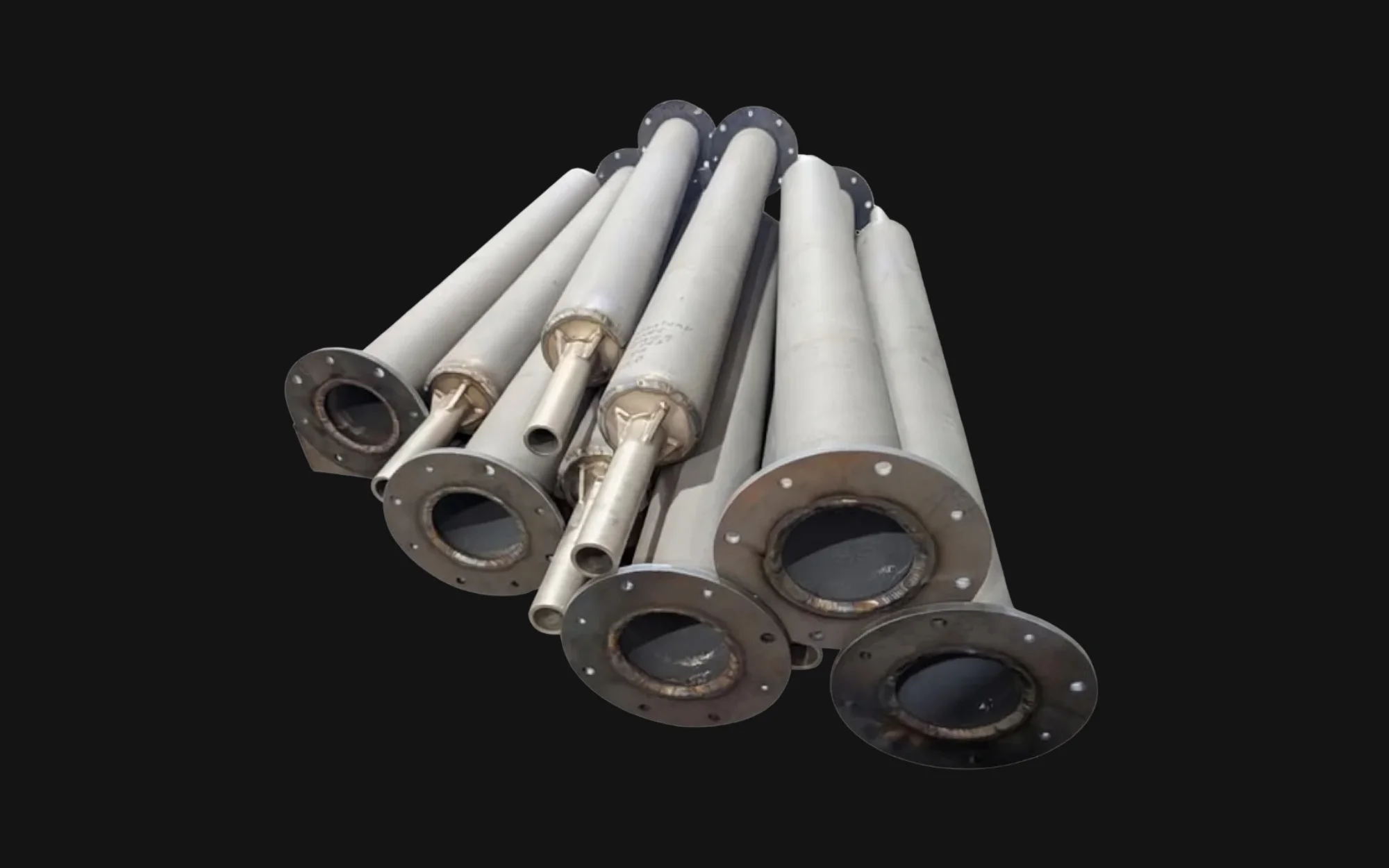
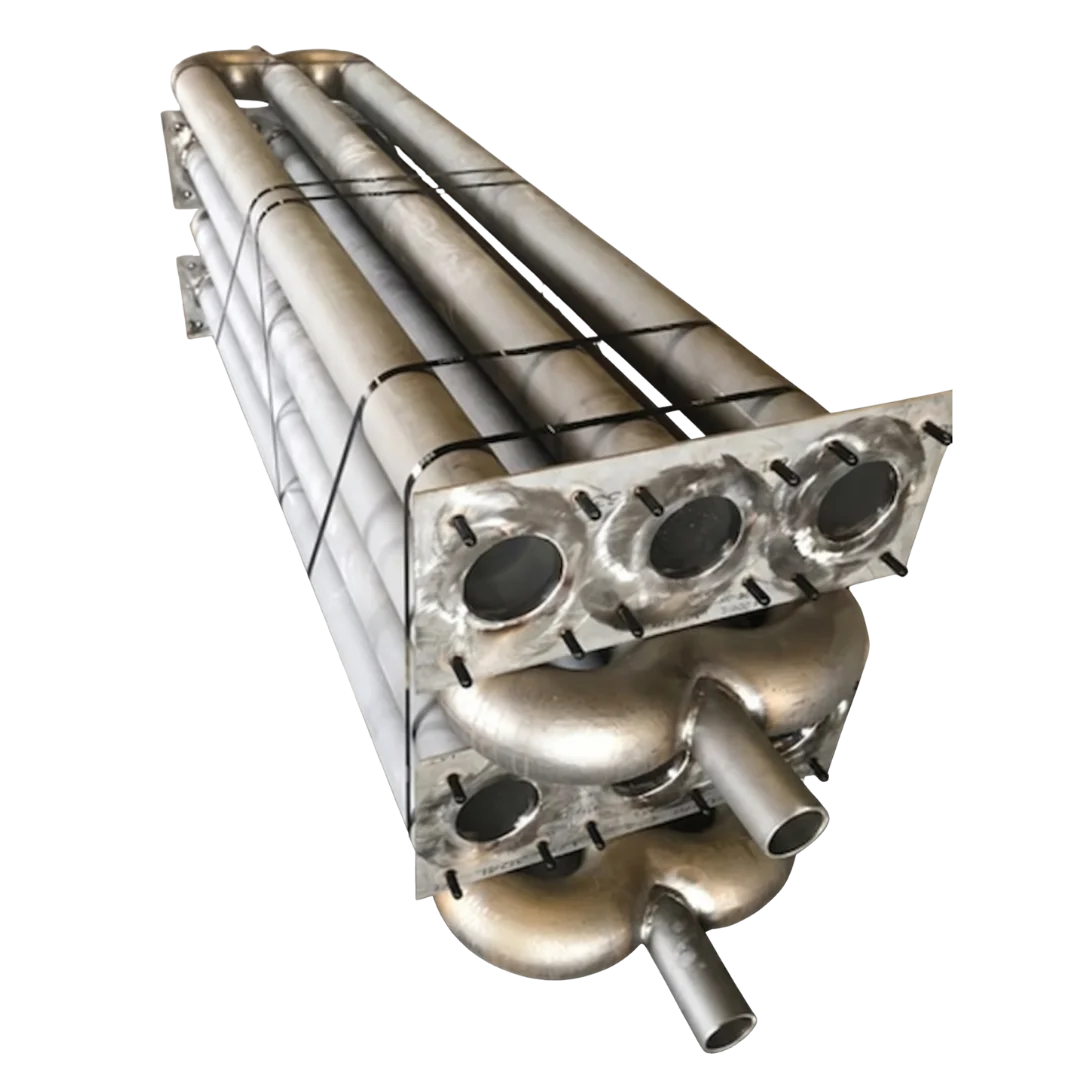
Tubes come in several configurations, including straight-through tubes, U-tubes, trident tubes, and W-tubes. More legs means more radiating surface in the same footprint. Many are centrifugally cast from heat-resistant alloys, while others are fabricated from wrought alloy.
Cast trident radiant tube assemblies for heat treating furnaces
The 6 Most Common Causes of Radiant Tube Failure
Most radiant tube failures trace back to one or more of these six causes, and in practice they usually stack on top of each other.
1. Overheating and Hot Spots
Every tube alloy has a practical temperature limit, and running past it shortens tube life fast. The bigger problem is usually local overheating rather than the furnace setpoint. A poorly tuned burner, a flame that impinges on the tube wall, or uneven firing can create a hot spot that runs well above the rest of the tube. That spot oxidizes faster, loses strength faster, and is usually where the tube fails first. On U-tubes and W-tubes, the firing leg runs hotter than the exhaust leg, so damage often concentrates there.
2. Creep and Sagging
At heat treating temperatures, metal under a constant load slowly deforms over time. This is called creep, and a radiant tube is always under load from its own weight. Horizontal tubes gradually sag between their supports. Some sag over a tube's life is normal. Excessive sag brings the tube closer to the work or the hearth, causes uneven heating, and puts bending stress on the tube where it passes through the furnace wall.
Worn, cracked, or missing supports make sagging dramatically worse, which is why radiant tube supports deserve the same attention as the tubes themselves.
3. Thermal Fatigue From Cycling
Every heat-up and cool-down makes the tube expand and contract. When different sections of the tube sit at different temperatures, like a hot firing leg next to a cooler exhaust leg, those sections try to grow at different rates. Repeated over hundreds of cycles, that mismatch produces cracks, usually at bends, welds, and other points where stress concentrates. Furnaces that shut down and cold-start often tend to see more thermal fatigue cracking than furnaces that run steadily.
4. Carburization and Embrittlement
In carburizing atmospheres, the outside of the tube is exposed to the same carbon-rich gas as your parts. Over time, carbon diffuses into the tube wall. Heavily carburized material becomes harder and more brittle, and it loses its ability to absorb the stresses of thermal cycling and sag. A tube can look fine and still be far more prone to cracking than it was when new. Alloy selection is the main defense here. Higher-nickel alloys generally resist carbon pickup better, which is why they're common in carburizing service.
5. Oxidation and Wall Thinning
Inside the tube, the wall is exposed to hot combustion gases. Over time, the inner surface oxidizes and builds scale. That scale can flake off and expose fresh metal to oxidize again, so the wall slowly thins. Running hotter than necessary, or with too much excess air at the burner, speeds this up.
6. Installation and Mechanical Stress
A radiant tube grows noticeably in length as it heats up. If the installation doesn't leave room for that growth, or the tube binds where it passes through the furnace wall, the tube gets loaded in ways it was never designed for. Misalignment, rigid connections at both ends, and supports placed in the wrong spots all add stress that shortens tube life, sometimes dramatically.
Warning Signs a Radiant Tube Is Starting to Fail
Most tubes give you some warning before they fail outright. Watch for:
Sagging, bowing, or bulging that gets worse between inspections
Cracks at bends, welds, or near the burner end
Hot spots or uneven color along the tube, visible through sight ports
A burner that's harder to keep tuned, or a zone that struggles to hold temperature
Unexplained shifts in atmosphere readings, which can mean combustion gases are getting in through a crack
Heavy scaling or flaking on the tube surface
If you see any of these, schedule an inspection before your next long run, not after it.
How to Extend Radiant Tube Life
Keep burners tuned. Check air-to-fuel ratio and flame pattern on a regular schedule. A flame that touches the tube wall will eventually burn through it.
Maintain the tube supports. Replace cracked or worn supports before they let tubes sag. Supports cost far less than the tubes they protect.
Rotate tubes where your design allows. Some operations periodically rotate horizontal tubes so sag works in the opposite direction, which can meaningfully extend service life. Check your furnace manufacturer's guidance before trying this.
Avoid unnecessary thermal cycles. When it's practical, idling a furnace at reduced temperature through a short shutdown is easier on tubes than a full cool-down and cold start.
Leave room for growth. Make sure every installation lets the tube expand freely and doesn't bind at the furnace wall.
Match the alloy to the job. Temperature, atmosphere, and cycling all affect which alloy will last longest. Our guide on how to choose the right heat-resistant alloy walks through the main factors.
Track every tube. Record install dates and positions. Patterns, like one position that keeps eating tubes, usually point to a burner, support, or airflow problem worth fixing.
Repair or Replace?
Some cracked tubes can be weld-repaired, but it depends on how much life the material has left. A tube that's heavily carburized or badly sagged is often brittle enough that a weld repair won't hold, or a new crack shows up somewhere else soon after. In many cases, replacing the tube is the more economical call once you factor in the risk of another unplanned shutdown. Either way, it's a decision for someone with eyes on the actual tube.
Plan Radiant Tube Replacements Before an Emergency
The most expensive radiant tube is the one you need today and don't have. Shops that keep spares for their highest-failure positions, or work with a supplier that stocks their most common tubes, turn an emergency shutdown into a scheduled swap.
Allegheny Alloy makes customized U-tubes, trident tubes, and W-tubes, and keeps the highest-volume, most popular tubes in stock. Centrifugally cast radiant tubes are available in a wide range of lengths and diameters, along with tube supports, generator retorts, rotary retorts, and muffles. All materials are supplied to ASTM specifications.
When old tubes come out, they still have value. Our scrap buy-back program purchases heat-resistant alloys, and eligible scrap value can be applied toward future orders.
Need replacement tubes or supports?Request a quote, or talk to our team about a stocking program for your critical replacement parts.
Frequently Asked Questions
How long do radiant tubes last?
It varies widely. Operating temperature, atmosphere, how often the furnace cycles, burner condition, and alloy all play a role. Tubes in severe carburizing service with frequent cycling may last a fraction as long as tubes in a steady, well-maintained furnace. Tracking install dates by position is the best way to learn what's normal for your furnace.
What's the difference between a U-tube, a trident tube, and a W-tube?
Mostly the number of legs. A U-tube has two, a trident tube has three, and a W-tube has four. More legs means more radiating surface in the same space, so the choice usually comes down to furnace design and how much heat you need from each burner.
Why are radiant tubes centrifugally cast?
Centrifugal casting spins the mold while the metal solidifies, which produces a dense, uniform tube wall with fewer internal defects than static casting. That consistency helps tubes stand up to long periods at high temperature.
Can a cracked radiant tube be repaired?
Sometimes. Small cracks in tubes with healthy material can often be weld-repaired. Tubes that are heavily carburized, badly sagged, or near the end of their life usually aren't worth repairing, because the surrounding material is too brittle to hold a weld for long.
What causes radiant tubes to sag?
Creep. At heat treating temperatures, a tube slowly deforms under its own weight, and horizontal tubes sag between their supports. Worn or missing supports, overheating, and carburized material all make it happen faster. Keeping supports in good shape is the simplest way to slow it down.
A real engineer carefully reviews every request and responds with a full, detailed itemised breakdown — no automated pricing, no hidden fees, no surprises.